
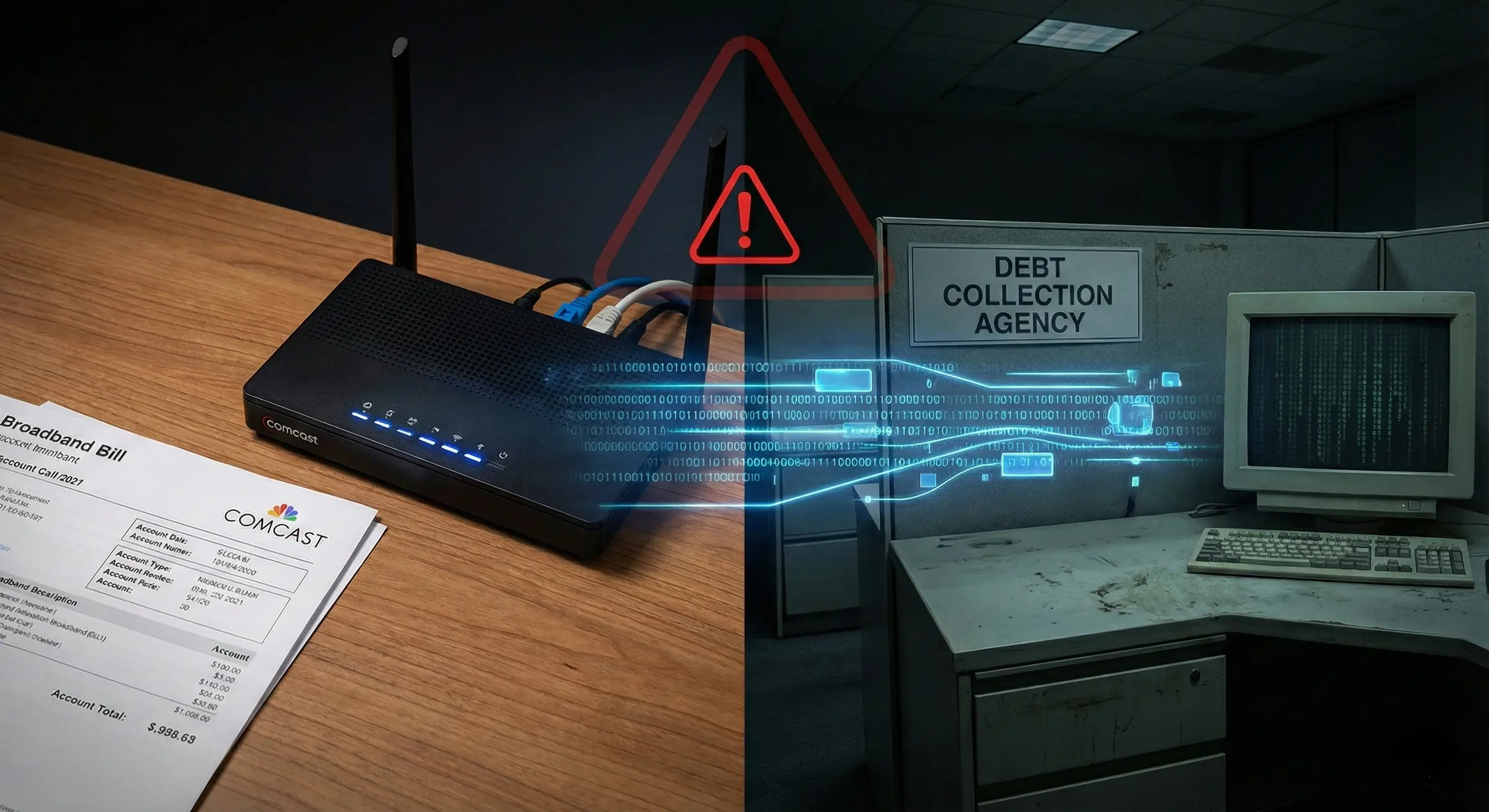
Comcast’s Vendor Data Breach in 60 Seconds
Comcast just agreed to pay $1.5 million after the Comcast vendor data breach exposed the personal details of roughly 237,000 current and former internet, TV and home security customers.
Here’s the twist: Comcast’s own systems didn’t get hacked. Instead, attackers hit a third-party debt collection agency called Financial Business and Consumer Solutions (FBCS) – a company Comcast had already stopped using by 2022.
Hackers broke into FBCS in February 2024 and accessed data including:
- Names and postal addresses
- Dates of birth
- Social Security numbers
- Comcast account numbers and internal IDs
FBCS waited months before admitting that Comcast customer data was in the haul and filed for bankruptcy before regulators got the full picture.
The FCC stepped in, hit Comcast with a $1.5m penalty and forced the company to roll out a new vendor-oversight and privacy compliance plan.
Your ISP Might Be Secure – But What About the Debt Collector?
Comcast wants you to know one thing: “Our systems weren’t compromised.” And technically, they’re right. The breach happened on FBCS’s network, not inside Comcast’s own infrastructure.
But here’s the uncomfortable bit:
- Comcast handed customer data to FBCS so it could chase unpaid bills.
- FBCS stored that data for years – even after Comcast stopped sending new accounts.
- Attackers hit FBCS in 2024 and walked off with data from hundreds of thousands of broadband customers.
So while your ISP invests in firewalls, SOC teams and all the buzzwordy security tools, the weakest link might be a low-profile vendor you’ve never heard of – and never agreed to deal with directly.
That’s the same pattern we saw with the SitusAMC banking vendor breach, where a back-end tech provider exposed sensitive mortgage and lending data for major US banks.
What Exactly Went Wrong in the Comcast Vendor Data Breach?
The Timeline – From Hack to Fine
Based on FCC filings and multiple reports:
- Feb 14–26, 2024: Hackers gain unauthorised access to FBCS’s systems.
- March 2024: FBCS tells Comcast about a breach but initially indicates Comcast customer data isn’t affected.
- July 15, 2024: FBCS reverses course and admits Comcast customer data was exposed.
- August 2024: The incident appears in public breach disclosures (including a filing in Maine).
- 2025: The FCC investigates, then announces a settlement where Comcast pays $1.5m and agrees to stricter vendor controls.
How Many People Were Hit?
Reuters and the FCC put the number at around 237,000 Comcast customers.
But FBCS didn’t only work with Comcast. Across all of its clients, the breach eventually ballooned to over 4.2 million people affected as new disclosures came out through 2024.
What Data Ended Up in the Wrong Hands?
Reports show attackers accessed:
- Full names
- Postal addresses
- Dates of birth
- Social Security numbers
- Comcast account numbers and internal IDs
In other words: plenty of fuel for identity theft, fraudulent credit applications and targeted phishing.
$1.5 Million Sounds Big. For Comcast, It Isn’t.
On paper, $1.5 million is a decent-sized fine for exposing 237,000 customers. In reality, it’s pocket change for a company with tens of millions of broadband customers and billions in annual revenue.
The FCC’s settlement matters more for the rules it imposes than the raw number:
- A formal compliance plan focused on vendor oversight and customer privacy
- A named compliance officer responsible for making sure vendors are monitored properly
- Stronger requirements around breach notification and data-handling practices
For affected customers, though, the story feels familiar:
- Your data leaks.
- You might get free credit monitoring for a year or two.
- The company pays a fine that doesn’t really hurt.
- The bankrupt vendor that actually lost the data basically disappears.
That’s the “blame the contractor” playbook in action.
Another Vendor Fail – From Mortgages to Broadband
The Comcast vendor data breach slots neatly into a growing pattern:
- Banks and lenders outsource loan processing, and vendors like SitusAMC end up leaking mortgage and financial records.
- Telecoms and ISPs outsource debt collection and billing, then data spills out of agencies like FBCS.
- SaaS and marketing platforms share data with sub-processors that most customers will never see named in any marketing brochure.
The common thread: you can’t outsource accountability. Regulators and customers still look at the brand on the bill – not the company in the fine print.
What This Means for You (Even If You’re Not a Comcast Customer)
You don’t need to live in Comcast territory for this to matter. The lesson is bigger than one ISP:
Any company that bills you, lends to you, or chases your debts is almost certainly sharing your data with third-party vendors.
Practical steps if you’re caught in a vendor breach
Whether it’s Comcast, a bank, or another utility:
- Freeze or lock your credit with major credit bureaus if SSNs or dates of birth leaked. It’s still one of the strongest protections against new-account fraud.
- Use credit and identity alerts from your bank or a monitoring service (ideally one that goes beyond just credit files).
- Watch for targeted phishing that references real account numbers or past-due balances. Attackers love using recent breach data to sound convincing.
- Opt out of unnecessary data sharing where you can – some providers let you limit how much is sent to marketing or analytics partners.
Questions to ask your providers
You probably won’t get a perfect answer, but asking still helps push the industry:
- Which vendors handle my billing and collections?
- Do you delete my data from vendors when the contract ends?
- How fast will you tell me if a vendor with my data is breached?
- Do you audit vendor security, or just rely on a contract and a checkbox?
- Is my most sensitive data (like SSNs) encrypted and minimised at vendors?
If a support rep can’t answer any of that, it’s a signal about how seriously the company treats vendor risk.
The Real Takeaway from the Comcast Vendor Data Breach
The Comcast vendor data breach isn’t a one-off headline. It’s another warning that:
- Your data doesn’t stay neatly inside the company logo you recognise.
- Vendors you’ve never heard of may hold the most sensitive pieces of your identity.
- Fines alone don’t fix weak vendor governance – but they do show regulators are watching.
For now, the best you can do is keep your credit locked down, stay alert for targeted scams, and start treating “which vendors do you use?” as a standard question whenever a company asks for your most sensitive details.