
Introduction
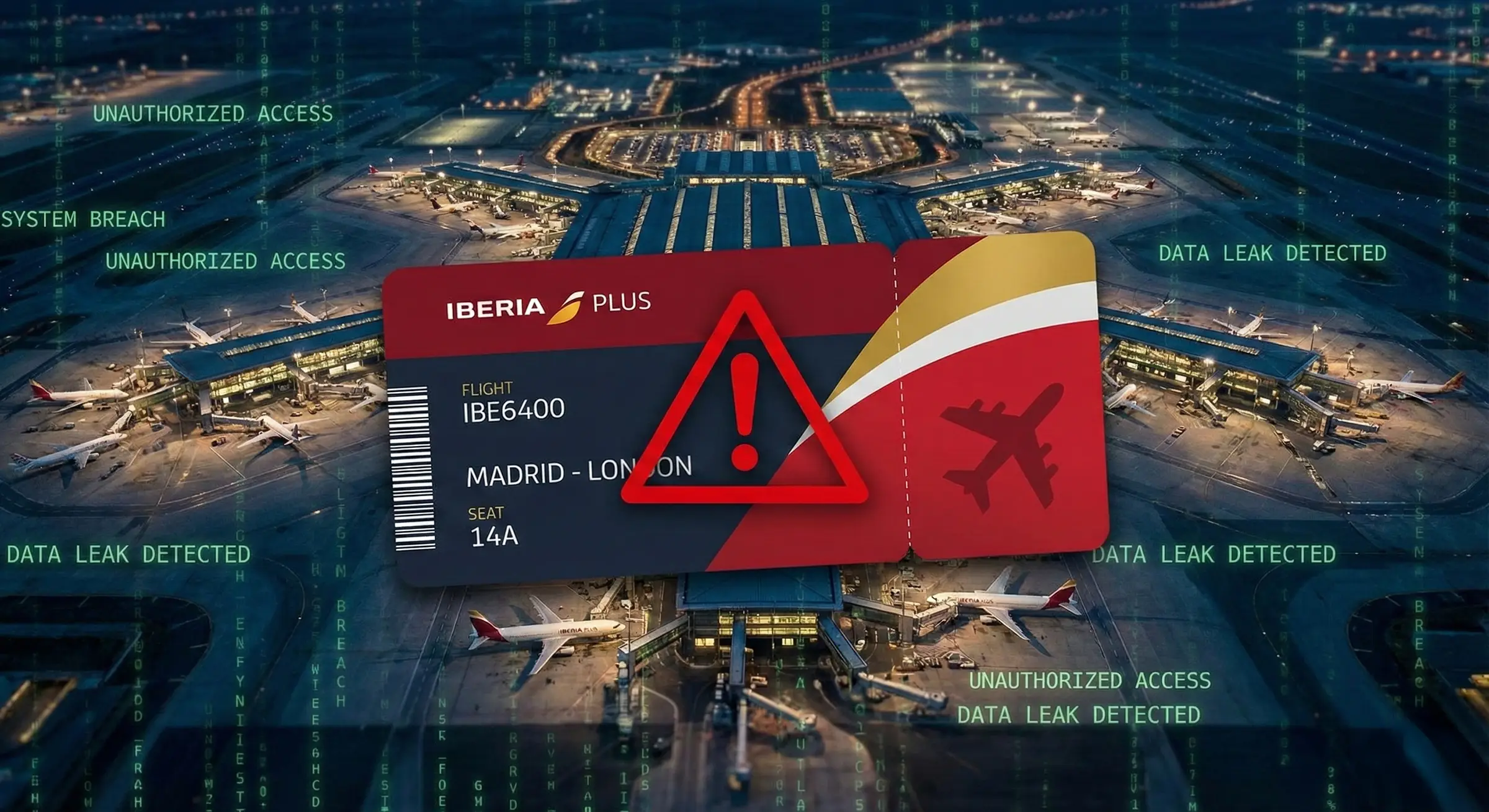
The Iberia airline breach frequent flyer data incident is a textbook example of how “just a loyalty number” can turn into a serious privacy and security risk. In late November 2025, Spanish flag carrier Iberia began warning customers that a third-party supplier had been breached, exposing names, email addresses and Iberia Club loyalty IDs. Around the same time, a threat actor on a dark-web forum claimed to be selling 77GB of alleged Iberia data for $150,000, including technical aircraft documents and internal files.
No passwords or payment-card details are believed to be involved, but that doesn’t mean this is “low risk”. In airline world, your frequent-flyer profile often says more about you than you think.
What Actually Happened in the Iberia Airline Breach?
A supplier gets hacked, customers pay the price
According to Iberia’s customer notification emails and public statements, attackers gained unauthorised access to systems operated by one of its third-party suppliers, not Iberia’s own core environment.
From there, limited customer records were exposed:
- Full name and surname
- Email address
- Iberia Club / Iberia Plus loyalty card identification number
Multiple outlets, including TechRadar, BleepingComputer and SecurityWeek, all confirm this same dataset. Iberia says there is no evidence that account passwords or full banking/card data were accessed, and it has tightened controls such as requiring verification codes for email-address changes on customer accounts.
The dark-web listing and the “77GB” question
A week before Iberia’s notification emails went out, a threat actor posted on a hacker forum claiming to hold 77GB of Iberia data, allegedly taken directly from internal servers.
The listing reportedly includes:
- Airbus A320/A321 technical and maintenance files
- Engine and maintenance programme (AMP) documents
- Internal paperwork and scanned certificates
So far, it isn’t clear whether this 77GB trove is:
- The same incident Iberia is now disclosing,
- A separate compromise of internal systems, or
- An exaggerated or partially fabricated claim.
Iberia has said only that the confirmed customer breach stems from a supplier and that the investigation is ongoing with law-enforcement and regulators involved.
Why “Just a Loyalty Number” Is More Sensitive Than It Looks
On paper, this looks like a low-impact breach: no card numbers, no passwords, no passport scans. But your frequent-flyer profile can reveal a surprising amount.
Your travel habits paint a detailed picture
Even basic loyalty data can be combined with other information to infer:
- Rough income level (frequent business travel, long-haul premium cabins, elite status)
- Home base and routine routes (MAD–LHR every week, seasonal travel to specific regions)
- Potential employer or industry (common corporate routes and hub choices)
Airline accounts also tend to be re-used for years, giving attackers a long-lived, verified email identity they can target.
Loyalty points are a currency, not a perk
Air miles and points are tradable value: criminals routinely sell compromised loyalty accounts or launder them into gift cards and flights. Previous airline breaches, such as the 2018 British Airways data breach and others in the IAG group, have shown just how attractive this sector is to attackers.
If an attacker can social-engineer support using your name, email, and loyalty number, they may be able to:
- Reset access using “I can’t get into my account” flows
- Change your contact email or phone number
- Redeem or transfer points before you notice
That’s why Iberia’s decision to harden email-change flows is important: it cuts off one of the easier account-takeover paths.
Supply-Chain Breaches: Iberia Is Part of a Bigger Pattern
Airlines rely on sprawling vendor ecosystems
Modern airlines outsource everything from customer-care platforms and loyalty management to ground-handling and marketing analytics. Security researchers and industry press note that this expands the attack surface dramatically, because each vendor is another way into customer data.
Recent years have seen:
- Ticketing and loyalty systems compromised via third-party marketing platforms
- Airport ground-handling or contractor accounts used to pivot into airline networks
- Vendors with weak security holding large volumes of passenger data “on behalf” of carriers
The Iberia case fits that supply-chain pattern almost perfectly: a supplier had access to loyalty data; the supplier was compromised; Iberia’s customers feel the impact.
Regulators increasingly care who your suppliers are
Under GDPR and similar laws, airlines can’t simply blame the vendor. They remain responsible for how customer data is processed, including due-diligence on suppliers and contractual security controls. Investigations into earlier airline breaches have resulted in significant fines and detailed findings about vendor management failures.
For passengers, this is a reminder that:
- You’re often not told which companies hold your data behind the scenes
- A single booking can scatter your details across multiple systems you’ve never heard of
- Opt-outs and privacy settings rarely cover all those downstream processors
How Iberia Customers (and Other Flyers) Can Protect Themselves
Even if you only flew Iberia once, assume your name, email and loyalty number may now be in more scammer address books than before.
1. Treat airline-branded email as high-risk
Over the next few months, treat any message that appears to come from Iberia or another airline with extra suspicion:
- Check the sender domain carefully – look for subtle misspellings or extra characters.
- Avoid clicking links in email; instead, go directly to the airline’s website or app and log in from there.
- Be very wary of urgent warnings about “expiring miles”, “account locked” or “bonus offers” that require card details.
Because attackers now know real names, email addresses and loyalty IDs, they can craft phishing emails that feel eerily legitimate.
2. Lock down your airline and travel accounts
For Iberia and any other airline you use:
- Enable multi-factor authentication (MFA) wherever it’s available.
- Use a unique, strong password stored in a password manager.
- Review your account recovery options (backup email, phone), and make sure they’re up to date.
- Check recent redemptions and bookings for anything you don’t recognise.
If your account does not support MFA, consider dropping your loyalty number from bookings where possible and opting out of storing card details in airline profiles.
3. Reduce the data trail where you can
You can’t fully avoid sharing your details when you fly, but you can:
- Decline unnecessary marketing consents and data-sharing options in account settings.
- Avoid re-using the same email address for every travel provider; consider an alias for airline accounts.
- Regularly review and delete old stored payment cards, saved passenger profiles and unused loyalty accounts.
These steps don’t undo the Iberia incident, but they make it harder for attackers to join the dots between different services.
What the Iberia Airline Breach Tells Us About the Future of Travel Security
The Iberia airline breach isn’t the biggest aviation hack we’ve seen, and on the surface the exposed data is “limited”. But it highlights three uncomfortable truths:
- Your frequent-flyer data is more revealing than most people realise. It reflects your movements, habits and sometimes employer, even if it doesn’t include card numbers.
- Supply-chain security is now as important as the airline’s own defences. A supplier with weak controls can undermine a flagship brand’s entire privacy posture.
- Phishing is the real short-term danger for most passengers. The combination of name, email and loyalty number is perfect fuel for convincing, targeted scams.
If you fly with Iberia, take this as a prompt to tighten your security hygiene. If you fly with anyone else, assume your loyalty profile is a tempting target and act accordingly—because this won’t be the last time an airline’s supplier ends up being the weakest link.